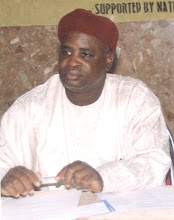
INDUSTRIAL RELATIONS AND COLLECTIVE BARGAINING STRATEGIES: THE NEW TRENDS IN LABOUR RELATIONS
BY
MU’AZU MOHAMMED YUSIF
BEING A PAPER PRESENTED AT A WORKSHOP ORGANISED BY NATIONAL UNION OF BANKS, INSURANCE AND FINANCIAL INSTITUTIONS EMPLOYEES HELD IN KANO ON WEDNESDAY 31ST JULY, 1996
This lecture is about labour relations in our country. The recent history of labour and industrial relations in Nigeria is full of uncertainties, inconsistency, lack of knowledge of labour laws by managers of labour relations in Federal Ministry of Labour and Productivity, and is even determined by selfish interests.
It is therefore a subject which must be handled carefully within a clearly defined scope. However, other relevant issues and questions will be posed so that the participants would raise all sorts of questions, comments and discussions, on all aspects of the subject.
Introduction
The underlying political and economic principle of the IMF/World Bank Economic Recovery Programme i.e. structural Adjustment Programme (SAP) the Nigeria’s state is implementing is supposedly to create an economic environment determined by market forces and a liberal political system. In the field of labour-management relations this means that the industrial relations practice is to be deregulated. The concept of deregulation of industrial relations means that a Government or any of its agents will not intervene on condition of work service between employers and employees. Specifically deregulation, according to Fashoyin is “simply that any employer is free to pay such wages or salaries that he finds economically feasible to attract returns and motivate his employees”. Its political conception is whether the unions could develop capacity to fight. My own contribution is going to focus on whether deregulation of collective bargaining will ultimately create industrial peace in Nigeria.
For the workers of this country, Nigeria’s government still tunes in a confused manner to strategy of state intervention at one level and deregulation in industrial relations at another level, hence this topic is important so that workers can really understand the intention of government and act decisively to defend their common interests.
Industrial and Labour Relations in Nigeria
The term industrial relations connote the relationship between employer and employees especially under conditions of production created by modern class society i.e. capitalist society. As an area of study and research, it is the study of processes of control over work relations, which involve collective workers organisation and of employers of labour.
The essence of the conflict and the desire to control it in places of work in capitalist society is because the employers and the employees are in perpetual relationship of antagonism. There is perpetual conflict among them because of the following reasons:
1. These are two parties working together. But the interest of each is against the interest of the other. The employer is only mainly concerned with his property which in turn may be related to the financial interest of a number of stockholders, while the employees or their organisation is interested in their material needs, seeing that they are the ones daily building and expanding the property.
2. The antagonism is manifested deeply in the relations that the less the employer pays workers the more profits he declares while the more workers insist must be given means that the less profit the employer would make.
Thus, a workplace in a capitalist society is an arena for contest. If the work really is to take place the parties must disagree and act on the disagreement. U.G. Damachi said that “the Union which is in constant and total agreement with management has ceased to be a union. The same is true for management”.
Part of the mechanisms of control of contests in the workplace is provided by the state. We can identify two normative thoughts to the role of the state. The pluralist approach applies the analogy of pluralism in society to industrial relations. It is assumed that in society of competing groups, a way should be found of continued process of concession and compromise. In the case of industrial relations the state becomes an intermediary, a conciliator and an arbiter in the process of making compromise and concession between the interests of employers and Trade Unions. The second approach is the Marxist approach. This approach says that in capitalist societies the state is the instrument of the bourgeoisie. “That the Executive of the modern state is but a committee for managing the common affairs of the whole bourgeoisie”. Hence, the state is always on the side of the employer in order to protect the interest of the bourgeoisie.
Nigeria is a neo-colonial capitalist society. It is futile and waste of time to tell workers of Banks and other financial institutions how Nigeria’s economy is being controlled and siphoned by foreign capitalists and their indigenous agents in Nigeria. There are state policies and laws which facilitate making of huge profits by foreign capitalists and their domestic allies in Nigeria. Isn’t the SFEM and FEM such policies and laws of Nigeria’s state? It is true and I stand to learn more about this from you. I believe it is also the case of Nigeria’s law governing industrial relations.
The priority of the state in industrial relations is to facilitate conditions for peaceful industrial relations system. In fact, important emphasis is placed on settlement of disputes. Theoretically, there are different strategies pursued by Nigeria’s state on procedures of settlement of disputes. The first one is the principle of voluntary collective bargaining. This emphasise the freedom of labour and management to agree, without state intervention, the conditions under which workers work as well as other issues of labour relations. Secondly, is the principle of sovereignty. Under this principle the government is the sole determinant of wages and other conditions of service at least, in the public sector. This is the reason why government sets up wages tribunal toward wages or increase wages of workers. This method of industrial relations, means that government dictates wages and conditions of service, whether is accepted by the workers or not. Again, this is indeed contrary to principle of collective bargaining, which is recommended by international labour organisation as the only democratic path for civilised industrial relations system. While the principle of voluntary collective bargaining is not given a chance to operate because of excessive state intervention in industrial relations system, the strategy of state intervention does not allow peace in the system. Therefore, a confused shift in government policy emerged. This is what is called the principle of limited intervention, which is a combination of some elements of principle of voluntary collective bargaining and that of state intervention. This confusion can be traced in the Trade Disputes Decree No.7 of 1976. Indeed, the decree aims to encourage the process of collective bargaining. But assigned responsibilities to agencies of government which can scuttle the commitment of parties to arrive at collective bargaining agreement.
The questions now are: how is this inconsistency in law operates under the Economic Programme which promotes the development of Market forces? How is it promising for industrial peace in the country?
Before we answer these questions it is necessary we sharpened our understanding of the concept of collective bargaining.
Collective bargaining: Concept and Reality
Collective bargaining is the life wire of industrial democracy. The expansion of collective bargaining is the major means of achieving industrial democracy. Hence, to attain democracy in workplace it is necessary that the procedure of collective bargaining is adhered by both Trade Union and Management.
The concept collective bargaining as defined by James and Morris is “…in all its current complexities is the bread and butter of trade unions, their lifeblood, what their members regard as the reason for their existence, the normal means of defending their interest and maintaining and improving their living standards. The term covers the various negotiating methods and procedures generally used to reach agreement between employers and unions at all levels…”. The procedures of collective bargaining “normally set out the different stages of the negotiating process between management and unions, the occasion for the use of conciliation process between management and unions, the circumstance for the use of conciliation or arbitration machinery, the reference of issues to third parties or committees agreed by both sides or laid down by legislation”.
Thus, the collective bargaining process is based on the principle that workers have a right to negotiate and agreed with their employers as to wages and conditions of work and that the employers recognise that right.
A perfect model of collective bargaining is that both sides of industry are allowed largely to determine the scope of relations between them. The state is expected to only facilitate this process. Therefore, laws are provided precisely for that. Such laws promulgated in Nigeria include:
1. Trade Dispute (Emergency Provisions) Decree No.1 of 1968 amended in 1969 with further changes in 1970.
2. The Trade Union Decree No. 31, of 1973
3. The Wages Boards and Industrial Councils Decree No.1 of 1973
4. The Trade Union Dispute Decree No.7 of 1976
5. The Trade Dispute Decree (Essential Services) Decree No.25 of 1976
6. The Trade Dispute (Amended) Decree No.54 of 1977
7. Trade Union Central Labour Organisations (Special Provisions) Decree No.44 of 1976
8. Minimum wage Act 1981
9. Trade Disputes Act 1978
However, while the laws are expected to facilitate settlement of disputes, in feeling of freedom of Association and of democracy, in many cases, they are not.
Collective Bargaining Under Structural Adjustment Programme
The economic crisis which beset the Nigeria’s economy from early 1980’s and the subsequent economic recovery programme i.e. SAP has subjected the issues of collective bargaining to unprecedented fundamental changes. The fact, is that both the crisis and the Economic Recovery measures have created pressures and economic constraints for both employers and employees which necessarily affects the industrial relations system. The changes are obvious in issues for collective bargaining and in the structures of the bargaining. However, the response of the state to these changes has confused the industrial relations system and has raised the fundamental question of whether the implementation of the Structural Adjustment Programme, which teaches deregulation, has really created a possibility of removing state intervention in the industrial relations system as well as institutionalising democracy for a permanent peace in the system.
The legal and institutional framework of the industrial relation system has not changed. Only that, at convenience of government, today it can say it deregulates and decentralises collective bargaining and tomorrow it will say in the interest of the nation the state is to intervene. Thus in 1991 budget speech to the nation, the President Ibrahim Babangida gave orders of deregulation of collective bargaining. The motive of this was the attempt by the federal government to introduce wage differentials among the three tiers of government i.e. the local, state and federal employees. By this it means local and state government administrations would enter into separate and independent negotiations with their workers unions with intention of reaching agreements on wage levels that fall within the abilities of these administrations to pay. That policy statement had got no legal backing. It was only a matter of convenience to weaken workers’ union in the Nigeria’s civil service and to minimise wage bills of the three tiers of government in Nigeria. Therefore, there was no economic guarantee and no legal security for the workers to accept that procedure. As such, it became convenient for government to return to commission’s system in determining wages.
The Case of ASUU-FGN Disputes of 1996
The confusion, inconsistency and arbitrariness in Nigeria’s industrial relations system is revealed in handling the on-going disputes between Academic Staff Union of Universities (ASUU) and the Federal Government of Nigeria.
The ASUU has since September 3rd 1992 handled negotiation and signed agreement with Federal Government of Nigeria on behalf of all academic staff of Nigerian Universities. The agreement was signed in September, but with effect from June the same year. The then National President of ASUU signed on behalf of Academic Staff of Nigerian Universities while the then Minister of Establishment and Management Services signed on behalf of the Federal Government of Nigeria.
The agreement was later endorsed on Friday, 12th September, 1992, by the then President of the Federal Republic of Nigeria, General Ibrahim Badamasi Babangida.
The agreement makes provision for review. Specifically, section 7.8 of the 3rd September, 1992 agreement, titled “periodic review of the agreement” provides as follows:
“It was agreed that this agreement shall be reviewed every three years”.
By the above provision of the agreement it means the agreement should be reviewed effective from June, 1995. Conscious and obedient of the collective bargaining machinery, the academic staff union of Universities, since May, 1995, pursued the federal government of Nigeria to come to respect of the agreement.
1. From May 1995 to April, 1996 had written letters eighteen times to Minister of Education, but no reply
2. Had held meetings and made telephone calls eighth times, but no response
3. Had made press statements nine times to draw the attention of the Federal Government to the developing industrial crisis
4. A similar letter to the Minister of Education was written directly to General Sani Abacha, head of State and Commander-in-Chief of the Federal Republic of Nigeria” to intervene by instituting the negotiating team of the Nigerian Government to review those aspects of the agreement which developments in our National Economy have either rendered obsolete or whose original values have been vitiated”. Yet there was no response.
Thus on 10th January, 1996 the Academic Staff Union of Universities declared Trade Disputes with Federal Government of Nigeria. According to Nigeria’s Law on industrial relations the Federal Government of Nigeria is to within three weeks apprehend the dispute. This can be either by accepting to come for dialogue to review the agreement or it can challenge the demand of ASUU in Arbitration Industrial Panel (AIP). Neither happened.
In view of all these ASUU gave a three one-day warning strikes for three consecutive weeks to show that ASUU was preparing for a total strike action if the agreement is not reviewed. There was no response. Thus, on 9th April, 1996 the union came out on a total strike action, which is still on. Then the Federal Government set a collective bargaining machinery to review the agreement. The negotiation was going without hitch, when the Minister of Education scuttled it.
Why? The government wants throw away the agreement, not through dialogue. But by force. The federal ministry of education directed that collective bargaining is deregulated and that each University is to negotiate with its respective governing council. Yet the ministry gives guideline to all the governing councils of Nigerian universities what it wants the councils to negotiate and what not to negotiate. The statement further said that the out-come of negotiation in each University will be sent to the government for harmonisation. Therefore, there will be no collective agreement.
That is a government purporting to promote deregulation of collective bargaining but at the same time destroying it with sense of state intervention in the process.
Conclusion
Perhaps the deregulation of collectives bargaining in the private sector is such more effective than in the public sector. However, the confusion is clear shift of policy to deregulation has undoubtedly affected collective bargaining in the private sector. For example, the policy of wage-freeze and government interference in union affairs, resulting in factions and splits are some of the constraints in collective bargaining in the private sector.
Having highlighted the deregulation of collective bargaining in the industrial relations system, it is necessary to suggest ways of enhancing effective collective bargaining and hence a peaceful industrial relations system.
1. The first and essential condition foe effective collective bargaining machinery is the democratisation of the industrial relations system. In line with this the federal government of Nigeria should adhere unconditionally to the provisions of international labour organisation conventions 87, 98, 151, 154 which guarantee respectively.
a. Freedom of Association and Protection of the Right to organise
b. Application of the principles of the right to organise and to bargain collectively
c. Protection of the right to organise and procedures for determining conditions of employment in the public service
d. Convention concerning the promotion of collective bargaining
2. That the entire legal and institutional framework of industrial relations system should be overhauled to incorporate recommendations of the ILO and democratise the institutions of the industrial relations system, by allowing them autonomy to speed up trade dispute cases.
3. That in industrial relations disputes with government, it should consider itself as employer not as government, so that it takes agreements signed with its agencies or ministries as binding.
References
1. Abel K. Uheku, Industrial Relations in Developing Countries: The case of Nigeria, Macmillan Press: London, 1983
2. ASUU and FGN, ASUU and Federal Government of Nigeria: Agreement, 3rd September, 1992
3. ASUU, Review of the FGN-ASUU Agreement of 3rd September, 1992: Decentralization of Trade Dispute, 1996
4. Damachi U.G. “Creating Industrial Peace” in U.G. Damachi and Taye Fashoyin (ed) Contemporary problem in Nigerian Industrial Relations, Development press limited: Lagos-Nigeria, 1986
5. Fashoyin T., Industrial Relations in Nigeria Longman: London, 1980
6. …, Deregulation and Demonstration of collective bargaining: Problems and Prospects: Paper presented at the National Workshop on Collective Bargaining in the Public and Private Sector, September – November 1992.
7. Federal Ministry of Education, Resolution of Crisis in the Universities New Nigerian, Thursday, July, 4, 1996
8. Jack Jones and Max Morris, A – Z of Trade Unionism and Industrial Relations Heinemann: London, 1982
Tuesday, 8 April 2008


Information Age: Moving with ICTs to understand the World around us
Information Age: Moving with ICTs to understand the World around us
The world today is referred as Information Age. The name depicts a new human relationship governed by use or manipulation of information in process of production, generation of knowledge, democratisation practices, etc. Information and Communication Technologies are developed in doing these. The technologies concern the use of computer-based information system to convert, store, protect, process, transmit and retrieve information.
In generation and dissemination of knowledge these technologies have become necessary in modern world. Five years ago, without available facilities on the campus, inspite of all the difficulties, I had to introduce all categories of my students to internet, e-mail and e-journals for teaching, learning and research.
Now, these facilities have become a common phenomenon that my students have started carrying out social investigation on ICT and economic, political and social issues. In the 2007/2008 Academic Session, under my advice the following research works are produced:
1. Aliyu Jamilu (2007) Challenges of Information and Communication Technologies (CITs) on the Third World Countries: An analysis of the “Digital Divide”.
This work is an analysis of both the positive and negative impacts of ICT on the economy, politics, and culture of “Third World Countries”. It shows that economy of the developed world is becoming more and more developed compared to that of the developing countries because of ICTs
2. Aminu Audi (2007). Impact of Information Technology on Democracy
This study shows that internet is a political medium which has profoundly changed the way we communicate, participate and oppose or support government policies. Therefore, it promotes democracy on one hand, and on the other it undermines it.
3. Sule Usman (2007). The role of ICTs in Development and Underdevelopment of Third World Countries.
This is a concrete examination of pro-ICTs argument that these technologies enhance development of many sectors of developing countries.
4. Ahmad Ismail Maisinga (2007). The role of ICT in the Global Trading System
This research is on how the ICT increases the globalisation of the global trading system.
5. Ashahabu Isah (2007). Globalisation and Media in Nigeria.
This looks at ICT as media. The ICT propels globalisation and thus brings out how it affects the development of media in Nigeria
6. Ameenu Yahaya Mohammed (2007). ICT and Global Insecurity.
That ICT is globalisation and vice-versa. Both resulted in unequal distribution of opportunities and benefits among countries in the international system. There is inequalities between the North and South as a result of inequalities in information technology. This also produces feeling of insecurity
7. Sani Bala Shehu (2008). Globalisation of Information and Communication Technology at Local Level: A case study of municipal local government Kano – Nigeria
This research shows the impact of globalisation through the ICT at local and community level in Kano – Nigeria
M.M. Yusif
Department of Political Science
Bayero University, Kano–Nigeria
February, 2008
How to do Research: What are the Problems
How to do Research: What are the Problems
There are perhaps unrecognised problems on how to do research by majority of students of the Department of Political Science. This can be seen in the various efforts of the supervisors of both sub-degree, graduate and post-graduate students.
The few serious students are not left out in discussing their weak capability in social science research. The students observations in one debate I witnessed among them centred on two positions.
1. One is that they are generally deficient on the skills i.e. methods and techniques of social science research.
2. Second, the students argued that they lack thinking abilities, perhaps because their training and orientation in the faculty of social and management sciences is not directed to ground them in ‘Thinking’.
These have raised many questions which deserves continuous debate among the students as well as among other members of the faculty. Obviously, issues which need to be recasted would include methodological techniques; theory and method in social research; post-modern reflections in research; etc.
I have no doubt that the discussion may cause shift of our priorities from Traditional Research Method to Post-modernist forms of social enquiry. Needless to stress, but just for reflection is that the traditional social science research method continues to dominate since the faculty is established. This method employs only quantitative approach in designing research, collection of data, and in manipulation and analysis of data. This method has many limitations which need not be spelt-out. But one can be stated because of its significance here. That is that, students of all levels concoct false data and claim it is reliable. On a questionnaire form of data this is easy. It is just to get into a room to fill thousands or hundreds copies of questionnaire by self. Where there is sincerity to collect the data by questionnaire form the scientific criteria are hardly adhered to.
Whereas in social science research these are not reasons for alarm as there are always ‘methodological medicine’ to solve a methodological problem. For example, a multiplicity of methods could be used to verify and enrich data as well as the results of the investigation. But especially, at undergraduate level is not common to do that by students.
There are numerous other methodological difficulties always seen in all categories of the students in Department of Political science.
1. Virtually all categories of students do not know how to make Literature Review. Or they don’t even know what it is. It is worth saying here that doing research is a lot like learning about anything else. As you need to learn the terminologies writers on your area of research use, the big controversies over ideas, and the different factions that define the major theorists. By Literature Review all these could be understood.
2. Subsequently, it becomes very difficult to form theoretical framework. Sometimes it appears that the texts or ideas in the literature review departs from the ideas in the theoretical framework. One dimension of this problem is because students do not want construct their theoretical framework, but to get a ready made theory to apply. Whereas this is allowed, but not in every case.
3. In many cases both undergraduate and post-graduate students got into research without enough reading on the subject of the research. Therefore they got stuck along the way as they are ill-prepared.
4. In gathering of data: in survey research students are hardly guided by scientific criteria in framing and administration of questionnaire. While in non-survey method, students of all categories cannot distinguish between secondary analysis; documentary research and content analysis. For, almost all of them, reading of documents and any other text materials is called content analysis. No! content analysis is different.
5. In analysis of data most students do not know other methods of quantitative analysis (e.g. pie chart; bar diagram; various types of scales) except the tabular method.
6. The relationship between “fact” and “theory” which in social research is very important in determining the objectivity of analysis is always very weak. However, a researcher should be aware that theory and data although are distinguishable but the difference between them is not absolute.
7. Writing research report is a science and a method of its own. There is politics in writing research report. Writing research report has its own logic, linguistic form, etc. but these are hardly issues in presenting research reports to adhere to in the faculty of social sciences.
8. Other problems are also seen in formulating research question, forming statement of research problem and research hypotheses. In many cases these problems arise because students always wanted to see how others before them did their own. So, they wanted to copy what is not necessary the same with what they wanted to do
It is clear that the social sciences including political science are undergoing important changes. Globalisation has changed everything including the development in the knowledge industry. We are witnessing another scientific revolution in the structure of knowledge. In this period of changes traditional perspectives, methodologies, styles, and assumptions are being questioned – a web survey; a computerised literature searches; application of SPSS (statistical social science computer package programme); etc. are making social investigation easier.
However, such tools must be integrated with skills which bring history, philosophy and science together, to document in knowledge form the problems and consequences of social action. Then ultimately this could give out a knowledge which is not going to be dumped and rot in a dark room or hidden to plagiarise, but become public issues as much to serve for further development of knowledge.
Then there are issues personally troublesome to researchers which all students should note
1. Without entering fully into how social science research is carried out, it is important to start by saying that research is a social criticism. Therefore, whether students have or have not undergone a creative thinking training, they have to become thinking students and practice thinking in order to become good researchers. A good research is identified not by the number of statistics or the style of the report, but by what contribution made to knowledge.
2. That must be followed by full preparedness. The initial problem of student researchers in the Department is that they are not set and prepared by the time they got into it. They often choose or copy a topic somewhere and before they read widely enough they start writing. It is always better you choose an area and read substantial number of texts before you set for topic formulation as well as formulating research question. Without the preparatory reading, even if one has a topic would have difficulty in formulating a research question.
3. Again, many students have a very wrong perception about what research is. Indeed if you read enough on the research area, you will somehow be able to produce sensible ideas for further research. But it is not automatic, as to form a statement of research problem and hypotheses. One has to get the training and learn how professional researchers typically generate problem statement and hypotheses.
4. Developing ideas for research also involve theory formation. A theoretical framework in research completes conceptualisation of research because it contains the body of ideas which helps researchers to see through the data collected and its analysis. In reality the adequacy of the relation between theory and data is the most important criterion in establishing the objectivity of analysis of the data and generally of the status of the knowledge. In theory formation all categories of the students are weak. They always start with application of already existing theory i.e. elite theory; underdevelopment theory; etc in whatever study they are doing. But a researcher can construct his or her theory independent of the existing theories. I think this must be taken seriously in training of students. If we are to make a study of a sample of these projects, one problem we would definitely come across is of a weak relationship between theory and data.
5. What about writing a research report. This is an area to the best of my knowledge has not been part of the curriculum, perhaps that is why different forms of this is not displayed to the students to choose. In social science research, writing a report is regarded as a method, so it should be taken seriously in training of students.
6. A combined operations, using several methods for one study can be used in all kinds of study. It has always been the case among professional researchers that one study may include examination of documents, of statistical records and the interview of key informants. A questionnaire research may also be combined with some of the above, except in a matter of only counting simple facts about certain social categories. Another exception may be when secondary analysis is the main method of the research. At undergraduate level in particular, students are hardly introduced to multiple method in research.
7. Students hardly distinguish between secondary analysis and documentary research and or content analysis. For details about secondary analysis research see my other paper titled “How to write small research project”. Secondary analysis research is to reformulate and reassess existing texts on a subject with further research questions to develop another knowledge. Furthermore, one of the most important and least utilised purposes of secondary analysis is to replicate prior research findings, because in any original data analysis there is bound to make many mistakes. In addition, a data may be interpreted from different perspectives. The above are the objectives of secondary analysis method. There is a big gap in the training of the students on methodology as this is submerged in other research methods.
8. Acknowledgement of texts and other resources used as well as referencing are not methods in research but are essential components which tell about originality of knowledge composed. I doubt if this has occupied any place in the training of the students. They are left to wonder and see for themselves in the texts they read how is done. But unfortunately majority of students today are not reading students. At most they are not learners. Almost each one of them – from sub-degree to post-graduate have this problem of what to acknowledge and how to do it. In short, they do not know what it is. Many problems are seen here:
a. That only a quotation from another author is acknowledged.
b. That only the language of another writer is a subject for acknowledgement.
c. Therefore, a student can paraphrase the work of another person and claim it is his own.
d. Another disturbing example is how students credit a point of opinion given in a classroom lecture to the lecturer. Some of these are true and exceptional views of the lecturer. But some are not. For example, you would see a student defining democracy as “a government of the people, by the people and for the people” and would credit it to his/her lecturer on the “references page”.
e. Similarly, the numerous texts which appear as readings for students, (although we have to do with them in underdeveloped university system and where students do not know how to search for what to read) do not help matters in development of standard knowledge through research by students. For example, in this kind of texts one would be talking about political parties or about democracy as if he is the founder of the views and students cite him. Inspite of the availability of the texts by the original writers on the matter.
As for referencing, my paper on “How to write long semester group essay in large classes” would give you guidance.
M.M. Yusif
February, 2008
Monday, 28 January 2008
WHAT IS SAP/SFEM? IT’S EFFECT ON WORKERS WITH SPECIAL REFERENCE TO TEXTILE INDUSTRY
WHAT IS SAP/SFEM? IT’S EFFECT ON WORKERS WITH SPECIAL REFERENCE TO TEXTILE INDUSTRY
When I agreed to discuss this question in a seminar attended by experienced workers from Textile Industry, my response was what practical issues could be raised with such comrades on concrete problems pertaining to the impact of SAP/SFEM ON THE Textile Workers. Nevertheless, I thought I could still raise some basic assumption on the question at stake for discussions to enable us have a broader practical knowledge through questions and comments.
Given the nature of this topic the first logical question to ask is what is SAP? In order to understand what SAP means, it is more appropriate to refer to immediate past economic history of this country. It is a common knowledge that towards the first half of 1982 Nigeria’s economy went into serious economic difficulties. The manifest difficulties of the economy included balance of payment crisis, the inability of Nigeria’s state to service its short-term and long-term debt, inflation, unemployment, retrenchment, etc.
The causes of these difficulties were undoubtedly not unconnected with the neo-colonial capitalist structures of Nigeria’s economy which subjected our people to exploitation by imperialists and their local lackeys.
It is this general development which led to Nigeria’s government to apply for IMF support loan in 1982. The idea, behind this support loan was to allow Nigeria’s state and businessmen, local and foreign to obtain credit facilities, to sustain importation of raw material and machinery to keep up production.
However, IMF support loan is always accompanied by certain conditionality which provide the basis of what is called the structural Adjustment Programme (SAP)
These conditions include things like removal of subsidies on petroleum products and fertiliser, reduction of subventions and loans to parastatal and privatising some of them, withdrawal of industrial incentives to industrialists, devaluation of currency, liberalisation of the economy, retrenchment, wage-freeze, etc.
Since 1982, during the civilian administration and even during the repressive Buhari/Idiagbon regime, these measures have being effectively resisted by Nigerian people.
The big problem of Banagida regime was therefore, how to make the Nigerian people accept the IMF conditions. That’s why IMF loan debate was launched in November, 1986. Still, the responses of the majority of Nigerian people was to reject the loan and the conditions which accompanied it.
However, while the Banagida regime could not go against the popular opinion, he claimed to resolve the difficulties facing the economy through a deceptive method of rejecting the IMF loan while implementing the IMF structural Adjustment Proposals (SAP).
The President claimed that the SAP is indigenous and independently designed by Nigeria’s policy makers. This is far from the truth. The truth; however is that the SAP is a package of proposals which the IMF dictated since 1982 as conditionalities for extending its own loan or helping Nigeria obtain other loans. So, the fact that Nigeria did not accept IMF loan, it is yet guaranteed by IMF to obtain loan from other world financial institutions.
What is SFEM?
SFEM is simply a way of affecting devaluation which the IMF regards as the main element of SAP. It is one of the central pillars of market forces economy which SAP introduces. The components of this market forces are de-regulation of the economy, privatisation, subsidy withdrawal and wage freeze.
Since the introduction of SFEM in September 1986, it devaluates the Naira by about 400%, has facilitated the repatriation of multinational profits, and encouraged speculation by Nigerian businessmen.
The Effects of SAP/SFEM on Industry
Nigeria’s policy makers thought that SAP/SFEM is designed to assist industry by promoting export promotion industrialisation. However, there are three major aspects of SAP/SFEM which have a negative effect on industry. These are:
1. High cost of foreign exchange
2. Removal of government protection for local industry
3. SFEM has also been encouraging the flight of capital from the country by facilitating the repatriations.
4. Another destructive aspect of SFEM is on small-scale industrialists. This is largely because foreign exchange and imports become expensive for small-scale enterprises and are likely to be displaced by larger corporations.
The Nigeria’s Textile Industry is one of the oldest industries in the country. It has the largest number of manufacturing establishments. As early as 1975 the industry accounted for 16% of value added and 25% of total employment in the manufacturing sector. As such it presents a very good example of SAP/SFEM impact on the manufacturing sector in the country. In fact the Nigeria’s Textile Industry has even before the introduction of SAP/SFEM being battling with crisis arising from smuggling activities which eventually led to decline of the Textile markets and also by the increase in the prices of cotton which amounted to increase in cost of production. The impact of this crisis on the industry was massive retrenchment of workers to the extent that employment of Textile Workers fell from 200, 000 in 1970’s to about 80,000 in December 1983. Also by 1983 about one third of the Textile Mills have temporarily closed down while the remaining two-thirds are operating at between 30% and 40% capacity. Some were even operating in a three day week.
One important question to ask is whether the SAP/SFEM has succeeded in correcting the distortions of the economy in general and industry in particular. I will suggest that it doesn’t.
1. The Second-Tier Foreign Exchange Market has not succeeded in eliminating Black Market for currency, therefore smuggling continues to boom.
2. That the underlying assumptions of the SAP/SFEM is to promote export-manufacturing by local industries, but it is this same mechanism which removes protection on local industries to enable them produce at full capacity.
3. That the authors of SAP/SFEM predicted accelerated growth of Nigeria’s economy, but it is no other than president Babangida, in his 1987 budget speech stated that despite the introduction of SAP/SFEM, the economy has not moved an inch.
Effects on Workers
The only thing which one can say SAP/SFEM is achieving is that businessmen have been making large profits. Although SFEM as a whole does not seem to set correcting the distortions of the economy, the businessmen are compensated by high prices to consumers. For example the general level of consumer prices with 1982 as 100 was 278.6 in 1986. That is to say that it rose by an average of 69.7 points a year in these industries.
Since a wage-freeze is imposed the condition of workers becomes worst. Obviously the importation of some raw materials has led to a slight increase in employment but unemployment is still a very serious problem. Unemployment among those without school is very high, unemployment among those with primary, secondary and university education is increasing while continuous retrenchment is worsening the situation.
Another grievous aspect of the structural Adjustment Proposals on industrial workers in particular is how conditions of work in our factories are deteriorating even against the established laws of the land. I personally know that in many factories in Kano, you find three categories of workers:
Those that are called permanent workers: this category has the right to unionise and fights for its right with the management
Casual workers: are contracted to work for certain days, for twelve hours daily at N3.00 – N4.00 per day. This category of workers has no right to unionise and could be retrenched at any moment.
The condition of the third category of temporary workers is almost the same with that of casual workers except that this category of workers is employed on contract.
These are not the only scenario in our factories. In attempt to declare super-profits manufacturers used extortionate methods in their factories.
Conclusion
Let us now conclude by making some observations. It is obvious that Nigeria’s policy-makers did not initiate SAP/SFEM independently of IMF, rather it is a great design of IMF, to weld us irrevocably to the world capitalist system. Thus instead of SAP/SFEM correcting the imbalance in our economy and the problem of inflation, unemployment etc. the Nigeria’s state is busy exploring through the SAP ways of debt payment and debt services to our foreign creditors. At this stage we will like to recall that the SFEM has already now merged with the First-Tier Foreign Exchange, with the implications of multiplying our foreign debt by almost five times.
The Nigerian workers have through their central Labour Organisation, the NLC, and at different branches and industries resisted this assault on their living conditions. While some limited concessions might be granted here and there, it is our belief that a more concerted effort of organisation and unity of Nigerian workers are imperative to evolve an alternative system to SAP/SFEM. For an alternative to SAP/SFEM is the only option left for Nigerian workers to improve their conditions. This will require a revolutionary political will to reverse the existing power relation in the country which allows the control of the state by the neo-liberal international and local forces.
Mu’azu Mohammed Yusif
Department of Political Science
Bayero University, Kano
Wednesday 29th July, 1987
Time: 3.00pm
At Federal Palace Club
The Unity of Industrial Unions affiliated to Nigeria’s Labour Congress (NLC) is Necessary
The Unity of Industrial Unions affiliated to Nigeria’s Labour Congress (NLC) is Necessary
In December 1989, the Nigeria’s Labour Congress gave the Government an ultimatum to negotiate the Union’s minimum wage demands or face a General Strike. Before the ultimatum, 17 of the 42 Industrial Unions affiliated to NLC met in Ibadan and disassociated themselves from the ultimatum given by the Central Labour Organization.
We are struck by this development, at this time of the terrible experience of Nigeria’s working population. We remember the fractionalizations and the divisions in the history of Nigeria’s Labour Movement. This is the time our proletariat must match in solid ranks to make its future secured.
The necessity of the Unity of the Industrial Unions is dictated by the present exceptional circumstances in the history of Nigeria’s working population and working-class movement. The implementation of IMF/World Bank inspired Structural Adjustment Programme has brought unimaginable hardship to the working people of this country. And the government is assaulting the working-class organizations and the individuals against the programme.
Furthermore, we must not allow the consolidation of SAP. We must find an alternative to SAP. So, we must unite. The Industrial Unions affiliated to NLC must unite, if are representing the interests of workers. We are convinced that the genuine unification of the Industrial Unions can only be achieved on the basis of the following principles:
1. The involvement and politicization of ranks and files workers in Union activities is a guarantee of unity of the Industrial Unions. So, all trade union activities should be democratized, to give the mass of the workers a chance to participate.
2. Babangida Administration is a corporatist one. All the Unions must learn how not to become “flexible” while demanding something from the state. Any Union that becomes “flexible” may be bought and incorporated, and used against other unions.
3. In anything which affects the working-class, the Labour Movement should convene a summit with active participation of the workers themselves to discuss the implications on the workers and what defensive action to take to counter the action of the government.
4. There are strike threats by many industrial unions over the refusal of some state governments and some government establishments to pay SAP relief to the workers. The strike threats should go with a living wage campaign; to mobilize the mass of the workers themselves in carrying the strike threats.
5. All Unions should reject the government saying that workers can negotiate increase of wages with their employers. Workers need a review of the minimum wage, not an increase by employers which can also be withdrawn. This is calculated to divide workers.
6. The Trade Union Movement is to attract to its side other oppressed people of the society, by articulating their specific problems and defending their interests.
7. Many workers belonging to different Industrial Unions are members of community based Development Associations. In order to create a solid relationship between workers unions and community based associations and between workers of different indisutrial unions, it is good of workers unions to establish working relationship with such community-based associations.
8. The government has launched wonderful propaganda in Radio, Television, Newspapers, Posters, Pamphlets, drama and other theatre performances, etc. projecting SAP as good for the people. Yet we know SAP has only brought hardship. Workers organization should counter that by launching campaign against the present suffering of the people. This is a very sure way of uniting workers.
9. Industrial Unions are to strengthen their unions at plant levels, to fight the slightest assault by employers on the workers.
When the Unions become united, there is nothing workers will demand from government and/or employers, they cannot get. We therefore present this for the discussion of all workers’ organizations of our country.
M. M. Yusif
4th January, 1990
THE NIGERIAN LEFT IN SOCIAL DEMOCRATIC PARTY: REFORM OR REVOLUTION:---
THE NIGERIAN LEFT IN SOCIAL DEMOCRATIC PARTY: REFORM OR REVOLUTION: SOME THOUGHTS FOR RESEARCH
Dictatorship and repression has characterised the recent history of Nigerian politics. As a result of the current economic crisis and the growing radical ideas as an alternative, Nigerian ruling-class has become desperate searching for the best political arrangement to contain the left apostles.
Ibrahim Bdamasi Babangida obtained a workable equation. The economic rehabilitation programme of the state – the IMF/World Bank Structural Adjustment Programme put some economic constraints on the capacity of radicals to operate, there are also lot of political constraints.
While blocking any avenue of attaining a democratic polity, the Government dissolved all political associations formed as political parties including the Nigerian Labour Party which contains all shades of Nigerian Left, and floated two political parties – Nigerian Republican Convention and social Democratic Party, “a little to the right and a little to the left”.
Nigerian Left became divided on whether to join the “a little to the left” party or not. Four Nigeria’s left formations joined it and claimed that can turn the party to serve the interest of workers. Others refused, because the entire political arrangement cannot guarantee development in the interest of the working people.
The questions now are: what will be the future political tendency of the left in social/democratic party? What do they hope to accomplish and how? What will be the immediate and long-term agenda of the left not in social democratic party? In case the state evolves a multi-party arrangement after the present experience, what will be the political stand of the left in the social democratic part and the left not in the party?
This paper will project what will likely be the development. In the absence of organised, disciplined and united left, the state may succeed in causing more fragmentations of the left. Although in any revolution, there must be differences of ideas, but if the left is not united to a common principled position, it will not be in the interest of the revolution.
The paper is composed of six sections. Section one is an introduction with some theoretical positions on Democracy and Revolution. Section two treats transition to civil rule and Democracy in Nigeria. Section three is about Nigerian left and the transition to civil rule. Section four deals with the left in Social Democratic Party. Section five will attempt to highlight future political tendencies and political options of the left in social democratic party. Section six is the conclusion.
Mu’azu Mohammed Yusif
Department of Political Science
Bayero University, Kano
December, 1991
STRUCTURAL ADJUSTMENT PROGRAMME AND NIGERIAN LABOUR MOVEMENT:---
STRUCTURAL ADJUSTMENT PROGRAMME AND NIGERIAN LABOUR MOVEMENT: A CASE OF NIGERIAN CIVIL SERVICE UNION
BY
MU’AZU M. YUSIF
Department of Political Science
Bayero University, Kano
Two-Day Seminar for Local Union Leaders of the Nigeria Civil Service Union, Kano State Council
Organised by Bayero University Consultancy Services Unit, Kano from 7th – 8th February, 1994, at the Federal Secretariat, Kano
Introduction
The impact of SAP on the organised Labour Movement is devastating. Its effect on the economy of Nigerian workers has bred organisational and political lack of confidence on the Managers of labour affairs. Yet workers, as individuals and through their organisations have put up resistance against the on-slaught of SAP on their living standard and have joined broad struggles to improve the conditions of everybody. The Nigeria Civil Service Union symbolised these struggles.
The Civil Service
First what is the civil service? What constitute the civil service? In ordinary Language, all workers in the public sector are called civil servants. The concept is used to differentiate workers in the public sector from that in the private sector. Narrowly speaking and for our purpose of addressing members and leaders of civil service union, the civil service include only workers in the Federal and State Ministries. According to a 1981 statistics out of 2.3 million people in the modern sector wage employment 1.3 million, or 58 percent were in the public sector. Within the sector itself, the civil service, i.e. representing Federal and State Ministries, carried 261,000 (11.3%) and 427,000 (19%) respectively. This implies that in the public sector majority were in the civil service.
Labour Unions in the Civil Service
Trade Unionsm in Nigeria originated in the civil service. Historically, the number of unions in the civil service are not numerous, although nearly one hundred unions operated in the civil service before 1978 reorganisation of the Trade Union movement in Nigeria. In that year, more than 1,000 unions were re-organised. During that exercise the number of unions in the civil service has been reduced to eight.
In the following table the names of these unions, the number of unions that were merged to make them and their approximate estimated membership as at 1982 is shown:
S/N
Names of the Unions
No. of Unions merged
Approximate membership 1982
1.
Civil service Technical workers union of Nigeria
30
150,000
2.
Nigeria Civil Service Union
22
60,000
3.
Nigerian Union of Civil Service Typists, Stenographers and Allied Staff
2
12,000
4.
Printing and Publishing Workers Union
13
2,143
5.
Medical and Health Workers Union of Nigeria
17
20,000
6.
National Association of Nigeria Nurses and Mid-wives
3
25,000
7.
Customs, excise and Immigration Staff Union
2
14,000
8.
Association of Senior Civil Servants of Nigeria
2
90,000
The Nigerian Civil Service Union
The history of Trade Unionsm in Nigeria indicate that the first trade union formed was the Nigeria civil service union, organised in 1912.
It first started as Southern Nigeria Civil Service Union but later changed its name to Nigerian Civil Service Union after the amalgamation of the protectorates of Northern and Southern Nigeria.
Infact, before the 1929 Economic Depression, the politics of Nigeria labour movement was dominated by that of the Civil Service Union. During this period and even after formation of other organised unions in the public sector, before the Second World War, the civil service union championed most of the improved changes of conditions of service in the public service.
The 1978 Trade Union restructuring which reorganised all the Trade Union organisations into 42 Trade Unions came with one central Civil Service Union, with a national structure and state councils. That gives the present structure or Civil Service Union, Kano State Council.
SAP and Nigerian Workers
With the rejection of the IMF structural adjustment loan by Nigerian people, the Government of Ibrahim Badamasi Babangida, still came with another programme in collaboration with IMF which contains all the conditions of the financial institution. This is called SAP.
The conception of SAP is economic policy package which will open the economy to world big business, along the way to temporarily diversify exports, achieve fiscal and balance of payments viability, be able to pay foreign debts and strengthen the private sector.
The main strategies of the programme, in order to achieve the above stated conception is the rationalisation and restructuring of public expenditure, customs tariff and hence the civil service. Also are adoption of free exchange rate policy combined with liberalisation of the external trade and payments system and adoption of market forces principles on everything particularly the pricing policies.
In order to achieve these objectives through the strategies so employed certain policy measures came into being. These policies are:
1. Withdrawal of petroleum subsidy
2. Privatisation and commercialisation of public enterprises.
3. The emergence of liberal foreign exchange of market determined rates
4. The liberalisation of external trade and payments
5. The deregulation of interest rate, such that it is determined by market forces
6. Wages freeze and later wage deregulation
In effect, the implementation of the above policy prescriptions and others has brought a lot of hardship on Nigerian people especially the wage-earning group. Members of NCSU for example are horribly affected through:
1. Retrenchment of workers in the name of rationalisation of the public service
2. Like workers elsewhere, members of NCSU are going through, declining living conditions caused by declining value of the currency, stagnant wage level and increasingly rising inflationary trends.
3. Increasing difficulties because of virtual commercial value of Health Services and Education of the children of workers.
4. Unemployment as a result of retrenchment and closures of enterprises which brings more people under the dependency of “ordinary” workers, which is a burden on their wages.
SAP and the Labour Movement
In discussing the impact of SAP on Nigerian workers, it is necessary to treat it also on the level of politics. The SAP has indeed introduced a lot of unimaginable difficulties on workers. For workers the only solution is to abolish the programme. Therefore, while they are fighting to improve their conditions under the programme, their long-term objective is to get the policy measures abandoned. On the other hand the Nigeria’s state wants make that a permanent standard on the people. As such every political measure is to curtail human rights of Nigerian workers. A statement by Nicholas Van Hear captures the essence of this when he says:
“Wages freezes and other restraints on pay bargaining are a common concomitant of structural adjustment. Constraints on organisation remain in place for implementation (of) free market policies require authoritarian regimes, under which freedom of organisation and association are fragile”.
The transition programme of the Babangida Government imposed many restrictions on workers involvement in politics. Trade Unions activities are limited by repressive actions of the state. Labour leaders are under constant harassment and surveillance by the state. Security surveillance on ranks-and-file and labour activists in their places of work, disturb their consciousness and confidence of actions. Some labour leaders allow themselves to be co-opted into the political and economic structures of the state.
However, inspite of everything, Nigerian workers have resisted every act against their interests and interests of Nigerian people in general. The example of Nigeria Civil Service Union, Kano State council is a case in point. The Union, using the umbrella of Nigeria Labour Congress, Kano State Council fought to secure the implementation of SAP relief package and went against retrenchment of its members.
The Nigeria Civil Service Union is the workers group very closely related to state. The leadership therefore needs to develop extra commitments and direction to deal with forces against the interests of workers. In order to defend the interests of workers, leadership in this union requires a high spirit of loyalty to the union, above personal interests, and subjecting the method of work to democratisation of decision making.
Conclusion
It is worth noting for leadership of workers union that while struggles to defend interests of workers using legal procedures is not unnecessary the method of strike is also effective where employers do not have respect for procedures and the negotiated agreements.
Subscribe to:
Posts (Atom)