Wednesday, 31 October 2012


BAYERO UNIVERSITY, KANO
FACULTY OF SOCIAL AND MANAGEMENT SCIENCES
DEPARTMENT OF POLITICAL SCIENCE


POL.3314: POLITICS OF TRADE AND DEVELOPMENT: THE ROLE OF SPECIAL AND DIFFERENTIAL TREATMENT (SDT)


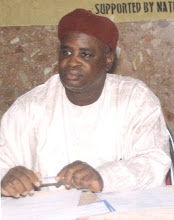
INSTRUCTOR: M.M. YUSUF


Introduction
The global trade environment under WTO Regime has created new rules and regulations which has strained trade relations, especially between the rich and poor countries i.e. the developed and the developing world.

From the Uruguay Round to Singapore, conflicts began to show which if are not resolved would not paved the way for healthy trade relations between nations. At Seattle Minesterial conference global social forces intervened with mass riots and demonstrations calling for social justice.

At Doha Round in 2001, an agenda for reform was set but since then there is no progress. This reform programme became known as Doha Development Agenda, because it is conceived to review the Uruguay Round in a way that would bring development to developing countries.

As there is no progress, the WTO Regime has been in crisis. The international trade environment is already in danger of protectionist practices by rich nation against the poor.

If politics is about conflict between different group and individual interests in attaining a common goal, then it is worthy to study the WTO Regime with a view to examine the development question in trade relation.

Description of the Course
The official title of this course is “Politics of development and Underdevelopment”. Initially it was framed to understand the impact of imperialism on development of Third World Countries. Over the last ten years the course is turned to a study of globalization and development. Since globalization is a vast field with many issues and perspectives, every academic session a different subject is chosen and developed for purpose of teaching. In the last seven years our attention goes to WTO regime, trade and development. In the last academic session (2010/2011) the focus of the course became “Politics of globalization and development”, with exploration of the conflict surrounding implementation of the “General Agreement on Trade in Services”.

In this academic session the subject-matter is “politics of trade and development. The Role of Special and Differential Treatment.

WTO-Linked to development could be periscope through different development theories and perspectives. We will deal explicitly with development paradigms, and bring out the assumptions of WTO development perspectives and their impact on developing countries.

The WTO regime is today being occupied by development disputes which have virtually made the Great organization into serious crisis.

We are going to use the principle of SDT, which is a paradigm for development within the context and politics of the WTO. The course is also going to introduce students to development agenda beyond SDT.

Topics and Readings
1.     General Introduction: Introducing the course; Topics and Readings. Course Requirements; Aid for learning and research; Assessment of the teaching programme by students; socialization; other things; Division of students into seminars.

Readings
1.     Paul H. The future of Political Science
2.     Shun Y. M. “Political Science at the age of chaos? The Paradigmatic shift”.
3.     Daniela P. “Handing Over the Torch in Political Science: Legacies of Past and Present Themes in the Italian Research Agenda.
4.     Mairo C. and Rasanna D. “E-Research: An Introduction to Online Political Science for Baginners and Skeptics”.
5.     Stephen V. F. “Guide to Methods of Political Science”.
6.     M. M. Yusif, Principles of Teaching and Learning in Classes of M. M. Yusif”.
7.     M. M. Yusif, “How to Write Small Research Project”.
8.     M. M. Yusif, “Education and Transformation of Students”.

Dispute On: The Course Content as Political Science?

2.     Basic concepts: Globalisation; WTO; Trade; Multilateral Trade; Development; SDT; Neo-Liberalism


Reading
General

Dispute on: Global Trade Environment is dynamic. Bring out the different phases of these changes in the last 50 years.

3.     Development and Development Paradigm Considered


Readings
1.     Matthe M. T. “Development Economics in the wake of the Washington consensus: from smith to smith screens IPSA Vol. 39 No. 3.
2.     Frans J. S. Beyond the impasse: New Direction in Development Theory.
3.     John Rapley, “New Directions in the Political Economy of Development”. ROAPE No. 62.
4.     Gilber Rist. The History of Development Chapters 1, 4, and 7.
5.     John M. “Capitalism, Imperialism and Development: A Marxist Discussion.
6.     Ann Phillips, The Concept of Development ROAPE No. 8.

Dispute on: In a World of Global Capitalist System the Concept of Development Means Development of Capitalism.

4.     Globalization – Development Discourse

Readings
1.  Bob Sutcliffe, The Place of Development in Theories of Imperialism and Globalisation.
2.  Adebayo Olukoshi, Globalization, Equity and Development: some reflections on African experience
3.  Joseph stiglitz, Making Globalization Work. Chapter 2.
4.  Togba N. T. “Globalization and Development”. In D. W. Nabudere (ed.) Globalization and post- colonial African States.
5.  David Held and Others, Global Transformation pgs 1 – 31
6.  Deepak N., Development through Globalisation”: A Research Paper.
7.  Gilbert Rist op. cit. Chapter 12
8.  Mittelman J. H. Globalization: Critical reflections chapters 2 and 11

Dispute on: Competing Explanation on Globalization and Development

5.     Globalization, Trade and Development

Readings
1.     Sheila P. How Developing Countries Trade: The Institutional Constraints. Chapters 1 and 15
2.     Mark W. and Dean B. “The Relative Impact of Trade Liberalization on Developing Countries”.
3.     Joseph Stiglitz op. cit. Chapter 6.
4.     Erik S. Reinor op. cit.
5.     Peter I. O. “International Trade and Economic Development: Theory, History and Contemporary Realities”.
6.     Robert Gilpin, Global Political Economy: Understanding the International Economic Order.
7.     Adam Smith, The wealth of Nation.

Dispute on: Arguments for and against free trade and protectionism

6.     WTO and Development perspectives

Readings
1.     Michael Sutton, The World Trade Organization and Economic Development.
2.     Timoth A. W. The WTO’s Development crumbs
3.     Basudeb G. “The WTO, Trade and Development in Basudeb G. (ed). The WTO, Developing Countries and the Doha Development Agenda: Prospects and Challenges for Trade – led Growth.

Dispute on: Why is it that WTO Appears like a Global Organization to Regulate the Trade Relations of only the Developing Countries?

7.     WTO Trading System: Implications for Development of Developing Countries.

Readings
1.     Joseph Stiglitz, op. cit. chapter 3.
2.     Nicola B. and Chanida C. “Ten Years of the WTO: Subordinating Development to Free Trade”. IPS Vol. 2.
3.     Robin Broad and others, “Development: The Market is not Enough”.
4.     Martin Khor, “A Perspective on Globalization and its Implication for Developing Countries.
5.     Martin Khor, “Globalisation: Implications for Development Policy.
6.     Irogba K. “Globalization and the Development of the Third World”. Journal of Third World Studies.

Dispute on: Take any two contrasting case studies of countries from the developing world and bring out the positive and negative consequences of the WTO Trading System.


8.     SDT: A New Paradigm for Development through Trade?

Readings
1.     UNEP, Reflecting Sustainable Development and SDT for Developing Countries in the Context of New WTO Kisheries Subsidies Rules.
2.     Maureen Irish, SDT, Trade and Sustainable Development.
3.     Aji Singh, Element for a New Paradigm on SDT.
4.     M. M. Yusif, Multilatrelism, Trade and Development: The Role of SDT. WTO.- Mock Summit Briefing paper No. 5.

Dispute on: SDT is a theory of trade, yet it is rejected by principles of free trade.

9.     SDT: Doha and Beyond

Readings
1.     WTO, Understanding the WTO. Chapter 5.
2.     WTO, Doha work programme.
3.     Martin Khor, Trade and Development: The Multilateral Trading system and Recent development in the WTO> TWN (2004).
4.     Mark Halle, Where are we in the Doha Round.
5.     Dilip K. D. “The Doha Round of Multilateral Trade Negotiations: causal factor behind the failure in Cancun”.
6.     M. M. Yusif, WTO Mock-summit: Briefing paper No. 2 (2009).
7.     M. M. Yusif, The recent development in the WTO. Mimeo (2009).
8.     Basudeb G. K. op. cit.
9.     Richard N. Trade, Doha and Development: A Window into the Issue.
10.                        James T. G. “The High Stakes of WTO Reform”.
11.                        The Warwick commission, The Multilateral trade regime: which way forward.

Dispute on: SDT and Doha are Development Perspectives within the context and structure of the WTO regime. But the two failed to agree. What is the power play?

10.            Theoretical Conclusion

Readings
1.     Rarder W. “The Problematic of Trade and Development: Beyond the Doha Round.
2.     Laurer C. H. “Latin America: Building an Alternative to Free Trade”.

11.            Conclusion II
Classroom Experience
Eating and chatting

JOINT READINGS
1.     Ford Foundation, The Uruguay Round and Beyond. The Final Report from the Ford Foundation Project on Developing Countries and the Global Trading System Co-ordinate by John Walley.
2.     World Bank. East Asia’s Trade and Investment: Regional and Global Gains from Liberalization.
3.     WTO, Doha and Beyond: The future of the Multilateral Trading System. Edited by Mike Moore.
4.     Richard N. Trade, Doha and Development.
5.     Erik S. R. How Rich Countries Got Rich and why poor countries stay poor.
6.     Bernard M. and Others. The Political Economy of the World Trading System: The WTO and Beyond.
7.     John Gulting. “Ten Theses on Development theory, Practice and Methodology, In Inge A. (ed.). Knowledge and Development. Proceedings of the NKU Annual Conference 1994, University of Tromso.

Course Requirement
v  The teaching of the course is by giving lectures. Each topic is expected to be covered in one lecture period. When the duration of the semester is against my plan some topics may be combined for treatment. However, the last 30minutes of each period will be for presentation and discussion on chosen text or question.
v  Assessment of students is based on end of semester examination (70%) and continuous assessment (30%). The CA will be determined by obligatory weekly assignment; active participation in discussing the assignment; a group small research project; research project response paper; a supervised test; ICT usage; attendance;
v  At the end of the semester each seminar will submit a report on classroom experience.
v  There are many teaching aids on my website which are recommended to enhance the capacity of students in ICT, communicative writing, etc.
v  In order to purify the system of learning and research I have to take strict disciplinary action against any student who is found on plagiarism. To avoid plagiarism you must not copy or paraphrase someone else work and present it as your own. Again, all texts consulted should be properly acknowledged. The penalty is that any work found to be plagiarism will receive zero. And any student found in two cases of plagiarism will result in being assessed “00” in the overall CA on the course.

Learning Needs Skills
Learning, even in tertiary institutions is a complex relationships of so many skills. It requires communication skills, team work, study devices, use of modern information and Communication Technology, etc.

The following learning guides which I have developed for my students in the last six years are also recommended for you. They are compulsory readings for all my students in the level 200. They can be found in my e-mail address: http://www.mmyusuf.blogspot.com.
They are hereby listed below:
1.        Assessing students examination papers: Marking Scheme
2.        Enhancing students capacity in learning through the use of computers, internet and e-mail
3.        Introducing Team/Group works in large classes
4.        How to use internet to source reading materials
5.        Study guidelines for effective performance by my student
6.        How to make patterned notes from texts
7.        Writing Examination: A Communicative Approach
8.        How to write group semester paper in large classes
9.        How to write Book Review
10.   Communicative writing: Exploring the concept
11.   Taking Note in class lecture or from a Textbook
12.   Using E-mail for Teaching, Learning and Research
13.   Using E-journals and E-Books for Teaching, Learning and Research
14.   Code of ethics in the class of M. M. Yusif
15.   ICT for learning and education: beyond information
16.   Criticism-self-criticism session
17.   Guidelines for small-research project
18.   Progress Report on ICTs for learning and research
19.   The underlying guides and principles of teaching in my class
20.   Reflecting on Teaching Military and Politics
21.   How to do research: What are the Problems
22.   Information Age: Moving with ICTs to understand the World around us
23.   Progress Report on the teaching of Peace and Conflict Studies

My watch word in this year’s teaching is whatever ideas received from me or from text books given to read are not correct and final. You must challenge and criticize them in order to keep learning. In this academic session is “Education for transformation of individuals as students. Get ready. Each of you is going to show and tell us that he/she has changed, from the time we have started to the end of the course and beyond.

M. M. YUSUF


Monday, 27 August 2012

THE SOCIAL MOVEMENT COMMONLY CALLED BOKO HARAM: THE WAY/OUT

THE SOCIAL MOVEMENT COMMONLY CALLED BOKO HARAM: THE WAY/OUT
That phenomenon called Boko Haram! What is it? What is its identity? As of now no one can say. It is still on process of formation.
Let us assume is not a religious movement! Not of foreign invaders or tribalists sent to cause chaos in Northern Nigeria. Neither a state terrorist organization.
Unfortunately, educated Nigerians have dissolved into street opinion about the subject and the solution. So, we are not making progress to understand and keep on talking about what could be the many dimensions of the way out.
I think, if there is any identity one could give to this phenomenon, it is youth upheaval in the urban centres, simply, urban youth violence.
Nevertheless, like the street talks, the intellectuals located in centres of learning and research are hardly aware that this kind of urban youth violence is a global phenomenon.
Many decades ago, precisely in the 1930s, a period of economic breakdown in the USA, produced distress and confusion in the daily lives of millions of people. This resulted in deepening contradiction in the elite and violence by the urban youth, which became known as unemployed movement, in order to streamline it within the framework of the law of United States of America. In Europe, even recently the youth had taken over some major streets, in some major cities, as a result of the Euro-Zone financial crisis.
In the twenty-first century, there is a resurgence of this global phenomenon in developing countries. In Latin America, liberalization and democratization of the society produced this trend. In Asia it is less, because Nationalist market Economy provided a shock-absorber.
In Urban centres in Africa is very common but is expressed in different form of violence.
Take the case of Nairobi in Kenya and Cairo in Egypt. In Nairobi, this has created a posture of confusion among the elites and in order to manage power, they adjust to maintain power.
There has been youth urban violence, in Northern Nigeria too! Because it is in the North, not in the South of Nigeria, it is being interpreted with sentiment. People do not mind to examine the structure of injustice, the greediness of the elites, elites response to youth problem, etc. in the two regions.
However, from whatever, perspective one takes it, this kind of violence may end up in positive or negative social change which will affect the whole of Nigeria as a nation or even not as a nation.
In many places where this occurred, the changes have become positive. But it depends how they are managed. How?
  1.  Recognize the movement as a social force which could be used for development of the society.
  2.  Let it be a social organization which, could talk and write on its demands
  3.  Let it be or make it to be an open organization, whose activities are governed by legal provisions in the country.
  4.  It should become an organization to talk openly with any group or any group including the state to negotiate with it.
  5.  People should not be arrested and killed for whatever reason without facing the law.
  6.  In case violence persists the law is already there to deal with the case accordingly.
M. M. Yusif
March, 2012
              This is for academic purpose.
It has no political or any                        other inclination. Whenever it is used must be acknowledged.


SEMESTER ASSIGNMENT 2011/2012 SESSION

DEPARTMENT OF POLITICAL SCIENCE
FACULTY OF SOCIAL AND MANAGEMENT SCIENCES
BAYERO UNIVERSITY, KANO
SEMESTER ASSIGNMENT 2011/2012 SESSION
POL 2204  POL4301
POL 3314  POL 4313
POL 8406
The distinction between Theoretical Framework and Literature Review in construction of knowledge is indisputable but the distance between the two is doubtful as any literature review is an assessment of many theories on the subject under study and theoretical assumptions are constructed with available literature relevant to the assumption.
Subsequently, from methodological point of view a literature review contains many theoretical postulations.
Each seminar in all the above five courses is to formulate a theoretical assumption relevant to the course offered. For postgraduate students is each student:- for example:
  •  Differences in language and religion stand out among the factors that generate conflict and tensions.
  •  Shift of global production to service-oriented changes the patterns of global trade
  •  Commodity production, of exchange value leads to development of capitalism
  •  New Military New Mission and Operation
  •  To understand youth upheavals in Africa today is to get to the relation between State and Economy.
These are examples of theoretical assumptions derived from POL 4313, POL 3314, POL 2204, POL 430 and POL 8406 respectively.
So, each seminar/individual from the above five levels is to formulate a theoretical assumption similar to above. But note that a theoretical assumption may be of a descriptive type; paradigmatic; abstractly theoretical; classificatory; or interpretative.
Then you are to search for relevant materials to construct the assumption to become like a theoretical framework. In other words it is like building a literature review on the assumption.
The following are to be observed:-
  1.  If you are ten not less than twenty different texts to be reviewed. If fifteen as in POL2204 not less than the number of students in the seminar times two.
  2.  Presentation must be according to standard i.e. to acknowledge all the references used e.g. (Mandel 1975:20) i.e. by Harvard system.
  3.  Each report is not to be less than 10 pages computer processed.
  4.  Each seminar/individual is to submit the assumption for approval this week and then within 4 weeks to finish and submit.
  5.  When submitted, reports would be exchanged between the seminar for review and discussion.
  6.  The report may appear like an article with sub-headings
  7.  All references must be listed as references at the end of the work.
Good luck
M. M. Yusif

GRAPHIC ILLUSTRATION OF TEACHING OF POL4301: MILITARY AND SOCIETYGRAPHIC ILLUSTRATION OF TEACHING OF POL4301: MILITARY AND SOCIETY

DEPARTMENT OF POLITICAL SCIENCE
FACULTY OF SOCIAL AND MANAGEMENT SCIENCES
BAYERO UNIVERSITY, KANO
GRAPHIC ILLUSTRATION OF TEACHING OF POL4301: MILITARY AND SOCIETY
FIRST SEMESTER
2011/2012 ACADEMIC SESSION
BY
M.M. YUSIF
AUGUST, 2012

Introduction
The original title of this course as in the books of the University is “Military and Politics”. However, I have unofficial title which I have given as “Military and Society”.
This is not without reasons. One is because there is a radical transformation of the Armed forces everywhere across the globe, although is uneven. Secondly, there is also transformation of state as well as of society. So, the triad of the state, Military and Society should not be treated as in the old order.
From Science point of view there is also a paradigm shift to analyse and understand the changes and the new relationship between the triads.
In the last fifty years military science has gone through three major approaches to military and society. One is informed by modernisation. Second, beginning roughly from mid-1970s by Marxist theory. The third one, has no specific name, but the best term to characterise it is post-modern approach.
These changes in the study of Military and Society reveal that society does not remain static. It changes. This shows that as society changes the military also changes. That is why in different era of human society there is different organisation, function, mission and objectives of the military. The trend reveals a pre-modern military; modern military; late modern military and post-modern military. (Charles C. M. John A. W. and David R. S (eds.) (2000).
A critical student may ask what would be the future of the post-modern Army. Both Science and Post-modern reasoning do not tolerate one direction of an answer to any social problem. One scenario would be to go back to renationalisation of the military from its present global mission, training and organisation. Secondly is, if we apply post-industrial society theory, in post-capitalist society there will be no conflict, so harmony will prevail, so there would be no need of military. The third scenario would be more sophisticated technology, more sophisticated military.
Specifically, we are going to examine the relation of military to society. The focus is to bring out the changes the military of various countries are going through in order to cope with its legitimate responsibilities. We would tackle these changes both from theory and practice perspectives.
As noted above the changes are uneven. Some countries have seen these changes more than others. We would trace the factors for these differences and we would employ a comparative approach to show the differences and the similarities between countries.

DEPARTMENT OF POLITICAL SCIENCE
FACULTY OF SOCIAL AND MANAGEMENT SCIENCES
BAYERO UNIVERSITY, KANO
POL4301: MILITARY AND SOCIETY - WEEK NO. 1
Armed Forces, State and Society: Theoretical Perspectives
Society produces both State and Military. So as society changes they also change. However, the relationship between the three agencies is complex. The two are not necessarily under the control of the society. Yet, as it changes, they also change. The contemporary world is a new society. This means there was the old one. You are hereby to create two models of complex relationship between society, state and military.
Old Model
New Model
Explain these two similar models to show the differences
M. M. Yusif
DEPARTMENT OF POLITICAL SCIENCE
FACULTY OF SOCIAL AND MANAGEMENT SCIENCES
BAYERO UNIVERSITY, KANO
POL4301: MILITARY AND SOCIETY - WEEK NO. 2
Military and Society: Historical Perspectives
Human society is not static. It changes. An old society contains elements of a new one. When an old society finally breaks which would ultimately give rise to new one, ideas, theories and concepts also break down to produce new ideas, theories and concepts. Although the old ideas would remain relevant in scientific studies, but cannot explain the new society, unless they are reformed.
More so when the old society changes, its institutions, agencies, actors etc. also changes, including their mission, function, organization, etc. This is also the case of military as an institution.
Look below the changes in the military which accompanied changes of the society and nature of the state.
Your assignment this week (week No. 2) is to explain the above.
  1.  Bring out the characteristics of each historical phase in the development of military and society.
  2.  What elements each contained of the following phase of development
  3.  How did the transition to the new take place
  4.  After the current phase what is the future?
M. M. Yusif
DEPARTMENT OF POLITICAL SCIENCE
FACULTY OF SOCIAL AND MANAGEMENT SCIENCES
BAYERO UNIVERSITY, KANO
POL4301: MILITARY AND SOCIETY - WEEK NO. 3
Military and Society: Paradigm Shifts
The relationship between military and society could be explained and analyzed from different theoretical perspectives.
Nevertheless, different historical periods are dominated by a given paradigm. A paradigm or a theory is an explanatory framework which explains something. In the case of military and society there are paradigm shifts, which followed transformation of the society to understand the change.
Observe the above carefully and answer the following questions.
  1.  Date the period of each theory
  2.  Give the characteristics of each
  3.  What does each tell on society military relation?
  4.  What characteristics of the society which produced each paradigm
M. M. Yusif

DEPARTMENT OF POLITICAL SCIENCE
FACULTY OF SOCIAL AND MANAGEMENT SCIENCES
BAYERO UNIVERSITY, KANO
POL4301: MILITARY AND SOCIETY - WEEK NO. 4
Constructing Military-Society Relations in Neo-Liberal Society
Military and Society in Neo-Liberal order rejects analysis from both classical modernization and Marxian theory. This seems to support the idea that in human society today there are diverse changes that, is not every theory that can explain and reach a correct conclusion.
This conveniently gives rise to a post-modern approach. On the one hand post-modern is not a theory on the other it is. However, if it is a theory, it has no body of ideas constructed or to be constructed to serve as a tool of analysis.
A post-modern analysis selects from the existing literature on the subject or from its reality to construct value-free instrument with a view to understand the phenomenon.
The Debate on Analysis of Military-Society Relation in Neo-Liberal Order:
You are to interprete the above figure of the tools of analysis of          Military-Society relations in a Neo-Liberal order.
M. M. Yusif
DEPARTMENT OF POLITICAL SCIENCE
FACULTY OF SOCIAL AND MANAGEMENT SCIENCES
BAYERO UNIVERSITY, KANO
POL4301: MILITARY AND SOCIETY - WEEK NO. 5
Debate on whether there is Post-Modern Military

Explain this figure including giving names of the debators.
M. M. Yusif


DEPARTMENT OF POLITICAL SCIENCE
FACULTY OF SOCIAL AND MANAGEMENT SCIENCES
BAYERO UNIVERSITY, KANO
POL4301: MILITARY AND SOCIETY - WEEK NO. 6
Military-State-Society Relation: New Military New Civil Military Relation
Study this figure and show how the Old and the New Military relate with State and Society.
M. M. Yusif


DEPARTMENT OF POLITICAL SCIENCE
FACULTY OF SOCIAL AND MANAGEMENT SCIENCES
BAYERO UNIVERSITY, KANO
POL4301: MILITARY AND SOCIETY - WEEK NO. 7
Information Technology and Weapon System
Explain this figure to show the impact of I.T. on weapon system in war.
M. M. Yusif


DEPARTMENT OF POLITICAL SCIENCE
FACULTY OF SOCIAL AND MANAGEMENT SCIENCES
BAYERO UNIVERSITY, KANO
POL4301: MILITARY AND SOCIETY - WEEK NO. 8
Military Transformation: Comparative Models
Study this figure and compare the models
M. M. Yusif
DEPARTMENT OF POLITICAL SCIENCE
FACULTY OF SOCIAL AND MANAGEMENT SCIENCES
BAYERO UNIVERSITY, KANO
POL4301: MILITARY AND SOCIETY - WEEK NO. 9
Theoretical Conclusion: The Future of Post-Modern Military – Moskos Model
Explain this figure to predict the future of the PMM
M. M. Yusif